Archive for October 2012

Half Term Project

I hope you have all had a relaxing holiday so far and are enjoying the sunshine!

I promised you a mini-project for the half term so here it is and I am very excited about what I will see upon our return from half term!

Entrepreneurs when starting out have a lot of different things to decide. What sort of product/service will the provide? How will they fund their business start-up? Where is the gap in the market? How might they segment the market? What will be their USP?

But one of the fundamental questions all businesses need to ask is what kind of business ownership will they choose?

There are 5 main types I want you to be thinking about and these are below:

  1. Sole Trader
  2. Partnership
  3. Franchise
  4. Private Limited Company (Ltd or LLC in Dubai)
  5. Public Limited Company (PLC)
The fact is that when starting out most business will not be looking to become a PLC because this involves listing themselves on the stock exchange. Something that Facebook has only done recently to great success (To them if not their new shareholders so much losing 50% of the share value...).

This in mind I want you to Identify which business ownership the below Entrepreneur should go for and Explain the benefits and drawbacks of this approach. You then need to Justify why this is the right option considering her other options.

Dr. Sheena Raja is a first year doctor who is newly qualified and starting her journey towards being a GP. Having seen the price of various beauty therapies in the UK she has seen that there is a lot of money to be made, something she is not adverse to getting involved with! Having looked into what she can offer as a qualified GP she has settled on the idea of providing "Laser Skin Treatments." This is a very exclusive part of the marketplace which is offered by a fair number of providers and example of which is here.

The gap that she has spotted is that not many qualified GP's are providing this service and if she can offer it she has a clear competitive advantage to the high-street businesses in that most people prefer to have a qualified doctor administer their treatments compared to a beautician. Wouldn't you?

Anyway, she knows what qualifications she will need and where to purchase the equipment plus all the costings involved. Her only issue is she knows very little about business ownership and the potential pitfall of choosing the wrong option. She is also keen to minimize risk and still see a good amount of return on the money she has saved and plans to borrow to start up the business. Can you help her out and give her the advice she needs?

Write out your response in a word document making sure you are not lifting information from websites and attributing and sources you have used.

Lamborghini (entrepreneur fact file)


Ferruccio Elio Arturo Lamborghini


This well renowned Italian entrepreneur started of as an industrialist. His mechanical know-how led him to enter the business of tractor manufacturing in 1948, when he founded Lamborghini Trattori, which quickly became an important manufacturer of agricultural equipment in the midst of Italy's post-war economic reform. This business elevated rapidly due to demand and soon it was bringing in tons of profit. Lamborghini’s increasing wealth allowed him to purchase faster, more expensive cars than the tiny Fiats he had tinkered with during his youth. He became so rich; he experienced a variety of supercars during his average week, changing everyday. One day he decided to get a Ferrari. After he had bought it, he realized how inferior the clutch, requiring several trips to Maranello to get it fixed. Thus, one annoyed Lamborghini modified the Ferrari’s clutch and enhanced other elements to improve performance. When completing this, he took the Ferrari to Enzo Ferrari to make him aware of the issues. Ferrari was offended.

Lamborghini, later, decided to open his own automobile company, resulting in rivalry between him and Ferrari.

Judging by his actions, I think he was a very determined individual who had a strong passion for automobiles, resulting in him being successful in his business. He calculated the risk of failure well by thriving for perfection in his cars. He could have failed and his farming machinery’s (Lamborghini tractors) reputation would have been effected tremendously. However, due to his financial strength, he could afford to take an economical dent if his supercar field went down in ashes. He had little risk of losing as his cars were similar to Ferrari’s, but with enhanced features. The rewards were vast and thus he became so famous. Fortunately for him, he didn’t fail during his journey to produce Lamborghini automobiles.

In 1974, Ferruccio sold Lamborghini and went to retire. Now Lamborghini is a subsidiary of 3 famous car companies and is part of a split ownership.

How to Make Yourself Into CEO Material

How to Make Yourself Into CEO Material

Venture capitalist Ben Horowitz argues that CEOs are made, not born. Here's how he thinks you can hone your entrepreneurial skill set.
www.businesssenseng.blogspot.com

Belief in talent can be dangerous.
Decades of scientific research shows that believing your inherent aptitude for a skill is set at birth is de-motivating. In comparison to those who believe that success is mainly down to hard work, those that believe ability to excel is fixed are less able to handle setbacks and often underperform.
Which is the perverse situation many founders put themselves in when they think about occupying the CEO's chair. That some folks are simply "CEO material" and some are not is a not uncommon belief among entrepreneurs and investors. But it's dead wrong, according to veteran entrepreneur and VC Ben Horowitz on his blog recently.
In the post, the partner at Andreessen Horowtiz recalls a friend asking if CEOs are born or made, and replies: "That's kind of like asking if Jolly Ranchers are grown or made."
If you're building a start-up and worried that leading a team feels incredibly unnatural to you, don't despair, writes Horowitz. There's a very good reason for that and it's not that you'll never make it as an executive: being a CEO is highly unnatural:
It generally takes years for a founder to develop the CEO skill set and it is usually extremely difficult for me to tell whether or not she will make it.
In athletics, some things like becoming a sprinter can be learned relatively quickly because they take a natural motion and refine it. Others, like boxing, take much longer to master, because they require lots of unnatural motions. For example, when going backwards in boxing, it's critically important to pick up your back foot first, because if you get hit while walking backwards the natural way—picking up your front foot first--often leads to getting knocked cold. Learning to make this unnatural motion feel natural takes a great deal of practice. If you do what feels most natural as a CEO, then you may also get knocked cold.
Being CEO requires lots of unnatural motion. From an anthropological standpoint, it is natural to do things that make people like you. It enhances your chances for survival. Yet to be a good CEO, in order to be liked in the long run, you must do many things that will upset people in the short run. Unnatural things.
The post goes on to identify giving feedback as one of the most unnatural CEO skills, offering lots of great advice on how to perfect this tricky to develop ability. If you're struggling with feedback for your team, take a few minutes to read his nitty gritty suggestions.
But the fundamental takeaway is simpler and more powerful than handy tips: Don't give up on yourself as not having CEO potential too early. Lack of early apparent talent doesn't mean you can't make yourself into a kick butt company leader.
"If you are a founder CEO and you feel awkward or incompetent when doing some of these things and believe there is no way that you'll be able to do it when your company is 100 or 1,000 people, welcome to the club. That's exactly how I felt. So did every CEO that I've ever met. This is the process. This is how you get made," concludes Horowitz

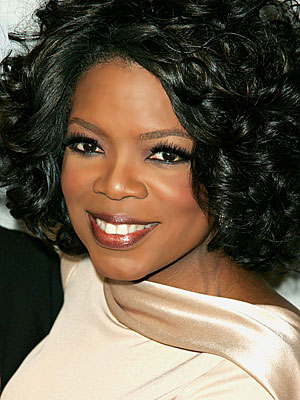
Entrepreneurial fact file on Oprah Winfrey


All about Oprah: Born Orpah Gail Winfrey in Kosciusko, Mississippi, United States. Oprah Gail Winfrey was the richest African American of the 20th century, however Orpah wasn't born into a rich, or even middle class family. Orpah Gail Winfrey was born in an economically troubled neighborhood and raised by a single-teenaged mother in the city of Milwaukee. She lived in terrible conditions. During church, she would recite poems, and verses from the bible. Soon the church and the entire neighborhood knew she had a gift and was nicknamed, “The Little Speaker". This prompted her to become a woman with a strong perspective, which millions across the world would want to have insight on. This prepared her for The Oprah Winfrey Show. She had a tough upbringing and was sexually abused and assaulted and had a son who passed away at the age of 14. At the age of 17, Oprah won a public speaking contest, which then allowed her to receive a scholarship to Tennessee State University where she majored in Speech Communications and Performing Arts. After being fired several times and choosing a job opportunity over school, Oprah finally found A.M Chicago and sent them tapes of her talking and they offered her the opportunity to have her own talk show.


Characteristics: Oprah has shown perseverance throughout the years and has desperately tried to stack the cards in her favor. Despite her tough upbringing, she tried her best in school and then later on pestered different talk shows for job opportunities. She is an independent head strong woman, who aimed to help other people and succeed at doing so. She’s vey studious and took her education seriously, she was the School President and she participated in various different debate and drama events.

Failures: In 2011, Oprah Winfrey launched a joint venture between Winfrey's Harpo and Discovery, OWN replaced Discovery Health in an attempt to attract a wider, more profitable audience. Its release in early 2011 marked a notable career achievement for the iconic television host. Discovery, whose brands include TLC and Animal Planet, invested $250 million into the 24-hour network, according to the Associated Press. Ratings still failed to meet forecasts with only 136,000 daily viewers over the course of the year. OWN premiered back on Jan. 1, 2011 to strong viewership with an average of 505,000 viewers. Unfortunately, one month later ratings plummeted to an average of just 135,000 with only 30 percent of those viewers in the targeted demographic of women ages 25 to 54. In an attempt to revamp the already struggling network, in March 2011 Discovery executive Peter Liguori replaced Christina Norman as CEO. In July 2011, Oprah took over as CEO and COO. So at the end of 2011, Oprah was forced to shut it down but despite her initial set back, she was determined to get it up and running again… Which she did!


Calculated Risk: Oprah has shown signs of not knowing how to calculate risk (she left university for a job which she was terrible at)! Although, she has made good calculated risks in the way in which she first developed her business. She started out working for a company who really liked her and gave her, her own segment and that then bloomed and flourished and once she saw it was a success she bought the rights to it from the company.

Why is she successful?: Oprah is successful because she is the world’s first black woman to have her own TV show! She is one of the richest women of the 21st century but she also has helped many people and starred in movies, radio productions and has her own magazine. She has been successful in everything she’s tried and even when she did fail, she tried and again and again!

Ways to Make Customers Love You

7 Ways to Make Customers Love You

Follow these simple rules and you'll have customers buying from you again and again and again.

 
1,371
Share

The greatest compliment anyone can receive in the business world is "I just love working with you." That's especially true when that compliment comes from customers, because it means that you'll be getting their business time and time again.
Here are the seven rules for getting customers to love working with you, based upon conversations with Jeffrey Gitomer, author of the The Sales Bible and Dr. Earl Taylor, master trainer at Dale Carnegie:
1. Make building the relationship more important than making the sale.
2. Create opportunities for the customer to buy, rather than opportunities for you to sell.
3. Have meaningful conversations and never give a sales pitch.
4. Be curious about the customer as a person and let the friendship evolve from that.
5. Don't try to be a hero who swoops in to solve the customer's problem.
6. Believe in your heart that you and your firm are the best at what you do.
7. Deliver exactly what you promised to deliver, no matter what.

Share the Love......

How to Build a Killer Consulting Business

5 Tips to Build a Killer Consulting Business

You already have the expertise and the contacts. So what do you do next? Here's a good place to start.
consultants

In some ways, consulting can sound like one of the easiest businesses to start. You presumably already have the expertise and the industry contacts... all you have to do is line up some gigs, right?
There's some truth to that but, of course, it's never that easy.
Here are five tips I've learned about starting up a consulting business.

1. Find a way to exploit specific knowledge gaps.
Your prospective clients likely aren't lacking smart or opinionated talent; if they were, want to hire a full-time employee, not a consultant. Rather, they seek outside expertise because they're exploring unfamiliar problems, markets, and/or methodologies. They need objective insight that their in-house people can't provide. That's where you come in.
Successful consultants fill pressing knowledge gaps. Case in point: My firm, TechSavvy, which helps customers create value and cultivate a competitive advantage on the back of emerging tech markets and trends. My clients don't hire me to provide raw data on technology; they have plenty of that. Rather, they need help translating it into actionable strategies, creating cutting-edge products and services, or adapting businesses and brands to new spaces. So that's the niche I try to fill.

2. Focus on relationships, not revenues.
This is a business based on relationships. The wise consultant always listens before she speaks. Never talk costs before first discussing your clients' specific needs and objectives. For reasons both practical and political, few businesses actively look to hire consultants on a regular or recurring basis; so, knock on many doors, make a point of keeping in running contact with connections, and above all else, maintain good rapport through your work--reputation is everything and it's vital to stay on clients' radars.
Remember, opportunities typically come in the wake of new ventures or sudden pressing issues. That's when you want to spring to mind as the perfect person to help. You must cultivate personal networks and strive for face-to-face interaction at all costs.

3. Sell results, not services.
Price by the hour and you'll be viewed as a commodity. Instead, keep clients laser-focused on the lasting value you create, and bill based on scope of work and end results. Never discuss whether your firm will be used, but rather how, and provide a range of possible cost scenarios and value-adds starting with your baseline requirements.

4. Employ a flexible structure.
Some consulting businesses gross millions from ongoing monthly retainers. Recurring retainers make sense when providing ongoing services (e.g. PR or marketing support, which is more of an external staffing function than consulting). But if you've done your job right, you've solved the problem--so be ready to move on.
Business will wax and wane. And because no two projects are alike, you must remain flexible by cultivating a freelance support network. Use contractors from varied industries and disciplines who can introduce additional expertise and perspective. This approach also lets you reduce overhead, minimize risk, and better staff projects to meet clients' needs.

5. Always be closing.
To succeed as a consultant, as much time must be devoted to acquiring new business as performing assigned tasks. I've found that the average time from initial contact to engagement can sit between six to 36 weeks, and close rates hover between 10% and 20%. Any downtime should be reinvested into business development.
With thousands of established, independent, and home-based businesses now vying for visibility, ultimately, partners are buying into you and your vision as much as the actual services. Presenting a mix of case studies, testimonials, and client showcases can also prove a powerful business driver--prospective employers want to see what you've done, so they know what you're capable of doing.

I was inspired!

How to Make Money in Your Sleep

How to Make Money in Your Sleep

You fell in love with being your own boss, but can your company scale and exist without you? Here's how to branch out into new revenue streams.
Money Sleep
 

With the small business sector growing at a rapid pace, many people are falling in love with the idea of becoming their own boss. While the concept may be tantalizing on the surface, the demand of marketing, selling, and providing a service can become exhausting and confusing.
Service providers don't always consider the difference between being an entrepreneur and a solopreneur.
An entrepreneur typically sets his or her sights on building a scalable business that can survive without them. The business is branded and positioned to be managed by a team. And someday the company may even become a publicly traded enterprise, sold, or handed down to the founder's heirs.
A solopreneur, unlike an entrepreneur who is building a branded business, is branding themselves only—and, hence, expansion opportunities may seem limited.
"When you start layering your business with products and additional services it's advisable that you begin slowly by modifying your time for dollars services," says business strategist and author Suzanne Duret. Duret has founded a total of seven companies and has consulted with CEOs of hundreds of small and mid-sized businesses. She is especially adept at helping soloists grow beyond their personal brand to create multiple streams of revenue.
Whether you are in the early planning stage for your business or examining your options for growth, it's important to consider your long term vision. Do you intend to remain a solopreneur, branding your name and services, or will you eventually want to brand a company name so that you can someday step aside and execute a profitable exit strategy?
"Most solopreneurs can't scale to a six or seven figure business by trading time for dollars," says Duret. "You have to consider expanding into areas that include group programs, live events, webinars, and information products to name a few."
Physical fitness trainer Colleen Riddle spent more than a year researching her options for growth. "I was extremely stressed about money," she says. "I was able to pay the bills, but that was all."
Riddle decided it was time to move from operating as a solopreneur and become a full-fledged entrepreneur. She began by researching possible niches.
"I discovered that the world is full of new moms who want to lose their baby weight," says Riddle. "But not everyone can afford a personal trainer." With this discovery, Riddle's mind worked overtime, asking "how can I create a system to help them and to make money in my sleep?"
The result is a product she calls New Mommy Makeover, a post natal DVD system that took most of Riddle's savings to create. But it was money well-spent. In 2011 New Mommy Makeover was recognized by sheknows.com as the best post-natal DVD system on the market and Riddle's product took off. She is now generating a satisfying income from her combined offerings, which include her DVD system, personal training sessions, and nutritional product sales.
"By adding less expensive, group related programs and information products to your business model you will meet the masses, rather than individual clients, and your revenues will increase accordingly," Duret advises.
"One of the ways to develop products is to simply reproduce one or more of the services you are currently offering," she says. "For instance, create a group program or an event, record the informational pieces and use them to create an audio or video product."
Duret emphasizes that research is important: "Be sure to ask your clients and prospects what they need and want and do something that sets you apart from the competition."
Consider these additional options to expand your visibility, customer base, and bottom line. Be creative! Think outside of your niche and never limit the possibilities.
  • Write an eBook or self-publish your book. This will give you credibility and become a platform for other tangible products that you are going to develop.
  • Bring in other service providers to do the work. These providers will become a revenue source immediately. They may pay rent, expand your types of service to attract a more diverse client base, or commit to bringing in a specific number of clients each month.
  • Offer a compatible product line. Colleen Riddle chose a nutrition product, what options are available to you?
  • Research additional niches. Is there an opportunity to extend your products and services to a whole new demographic?
After reading this article, you may Google this topic to make more research. there are thousands of materials on this topic alone. Hope you have been Inspired. Don't forget to share with a friend.

How to Succeed Against the Odds

How to Succeed Against the Odds

Struggling against difficult odds in business? Consider this wisdom from an Inc. 500 entrepreneur who came through a life-threatening illness.
rabbit and turtle


monte lee-wen
 
As a coach, I help entrepreneurs through the issues that keep them from their dreams. For the most part I see these individuals as driven, passionate, unstoppable human beings. But after my recent discussion with one entrepreneur, the bar has definitely been raised.
Monte Lee-Wen entered the United States from Canada with few resources and little money. But he had a dream, and that was enough to keep him going. It wasn’t long after coming to the United States that Monte built his commercial real estate company, growing from four employees working out of his home, to more than eighty employees occupying an impressive office building in Austin, Texas—all self-funded! He even made the Inc. 500 list in 2009 for revenue growth of 670.3 percent in the previous year. He then went on to make the Inc. 500 list in 2010, moving up to the 20th fastest growing company in all of Austin. Outstanding results for any business person, but what I find particularly amazing is that this young entrepreneur achieved all of this against some very significant odds.
Now 35, Monte was just 28 years of age when he established The PPA Group, a commercial real estate investment company. He maintained his company’s growth during the downturn in our economy while most commercial real estate companies were crumbling. And, as if that wasn’t challenging enough, Monte achieved all of this while battling a life-threatening illness. In fact, he suffered a temporary loss of his voice during surgery and proceeded to close the biggest deal of his career without being able to utter a single syllable aloud. Today, after months of rehabilitation to recover his ability to speak, Monte’s voice is strong, and he has a message to share.
“I was the least likely to succeed in my peer group and extended family,” says Monte. “But I refused to allow my problems, adversity, and health issues define me.” Monte came into this world with a rough start and from it he built an undeniable mental toughness. “I was fortunate to learn from an early age what it means to have mental fortitude and it made me tough all around,” he says. But Monte believes that not everyone has to suffer to attain the fortitude to build upon their dreams.
“I believe in strong leadership,” Monte says. “Every entrepreneur must learn to become an effective leader. If you don’t grow as a person, your business won’t grow either. Remember that your business grows in direct proportion to your own personal and professional growth.” Monte devotes a good portion of his time attending workshops and seminars, as well as reading relevant books and publications. Networking is key to his success. “Meet new people,” he says. “You can’t run with the giants and stay small. I wouldn’t have made it without growing myself continually through learning and meeting new people.”
I spoke with Monte about facing adversity, his journey down the road to good health, and succeeding in business—despite the odds. The pieces of information garnered from that conversation are the gems that I share here with you today. Monte Lee-Wen’s philosophies and guidelines to life and business success:

Always look at the big picture in the economy and in your industry. What may be coming down the pike that will affect your industry? What indicators in economy could trickle down into what you’re doing? Take note of these possibilities and plan and prepare ahead.

 Make sure not get bogged down. It’s important to create efficiencies, processes, and systems to get and keep yourself out of the rut. Don’t ever be afraid to take a step back to do this. Things may pile up in the short term but if you find solutions and work on the problem by building efficiencies into your business you will have the time to dedicate to other, more critical initiatives. Entrepreneurs who get bogged down in the daily requirements of their business often believe that there isn’t a solution. There are always solutions ; the real problem is that you don’t want to take the time to fix the problem. Stop. Fix it. Execute the solution. There may be a little bit of pain at first but will provide for long term success.

 Don’t work on the day-to-day, month-to-month, or even year-to-year. If you want to be viable you can’t afford to think only of the short term. Have a long-term strategy and vision and build contingencies for the “what ifs”. Dedicate money in your budget toward initiatives that will work toward long term strategies. Pay attention to the big picture; don’t get blindsided.

 After any setback, always review the circumstances and look for lessons. Ask yourself, and your team, a series of questions to gain perspective. Learn from failures, fail your way into success. Ask questions like, What did we do right? What did we do wrong? How could we have done it differently? After you identify the critical components put the exercise away, learn from the experience, get over the challenge and move forward.

 Take calculated risks. Evaluate your decisions by looking at the cost vs. benefit. Make sure that your assumptions are grounded in reality and fact. Look at rewards and benefits; surround yourself with the right people to get the job done. Plan ahead and keep your risks in check mitigating them along the way. Don't get paralyzed in the analysis; be decisive. Do this and the probability of success goes up dramatically.

 Trust yourself and apply a strong work ethic. More than you realize is within your control when you believe in yourself and work hard. Trust is a big factor in the decision- making process, as is your willingness to take risk. It’s also important to surround yourself with people who are smarter than you; people you can trust.

 Create multiple revenue streams to build a strong revenue model. Look at larger, more successful companies in your industry. Evaluate how those organizations would succeed if and when anything changes in the economic environment. What fuels their growth? Study their revenue models and, if you find a stable one, improve upon it and build your own.

 Perform due diligence in hiring employees. Interview your candidates thoroughly, check references, spend time getting to know them on a personal level. Also ask your team for input. Before considering anyone for partnership, make sure they prove themselves and always have an out.

 Be cautious about partnerships. People often bring in partners because they don’t trust themselves to do it on their own. Once you bring in a partner you’ve created a marriage in a sense. Be careful because this is hard to undo. Protect yourself legally and never give away too much when your bring people on board. Also, be very careful about creating partnerships with family and close friends - these often do not work very well. Only introduce a partner into the picture if you have to and never conduct business on a handshake; avoid ambiguity in these business relationships; ambiguity will cause conflict down the road.
“Starting a business is a scary thing,” Monte concedes. “It takes a lot of faith in one’s self. I see too many people questioning their abilities; they didn’t finish college, don’t feel smart enough, and so on. But none of that really matters. If you come up with an idea that you find value in and can take to market, just believe in yourself and do it. There are so many things that people will spend money on. Remember: just because you may have experienced disadvantages or a disability doesn’t mean that you can’t get past them. I believe that I am living proof that it doesn’t matter where you come from, just as long as you can believe in yourself and are willing to put in the necessary time and effort to succeed. “
I hope you have been inspired by this article. feel free to comment and share with a friend.

Jack Wills

So over the weekend Mr Oates and I were shopping in Dubai Mall and came across a cool pop up shop:

Why is this a prime spot for Jack Wills? Blog away Y10's!

Mr Oates: Hi guys! I hope the holidays are going well. I will be asking you about pop-up shops when you return and the potential advantages  We will be talking about the 4P's of marketing and so this image is a really relevant one.

I for one do not get Jack Wills as a brand so I will be expecting you to educate me on the target market and the potential reasons for doing something like what we see in this image.

Also on a side note, should I wear Jack Wills clothing? Or am I not their target market?

Inspire!!!

We all need inspirations from Entrepreneurs and successfull Business men. We carefully select topics that can benefit our Visitors and Clients. Feel free to comment and also share your own success story to inspired someone today.

Web tools

7 Web Tools Every Start-Up Needs

Whether you're just starting up or need a way to manage existing operations, these tools have you covered.
tools


My inbox is constantly cluttered with announcements about the latest newfangled Website that will change how we all do business. Some of them, like the inbox fixers I wrote about in my recent magazine column, really do help.
But there are a bevy of sites that have stood the test of time and gained a foothold with many entrepreneurs. If you just started a company, or you are looking to beef up your arsenal of sites to help with daily operations, these seven tools deserve a look.
1. ZenDesk
This customer service engine seems to pop up everywhere, which makes sense: It's used by about 20,000 companies and 65 million users. You can integrate the service into your own site, so when a customer has a complaint and support issue, you can track the ticket. Best part: The service works through multiple channels like Facebook, Twitter, and on mobile devices.
2. FreshBooks
I'm a big fan of FreshBooks because it seems to understand how real businesses work. Instead of offering a cheaper alternative to QuickBooks Online, this service includes features small businesses need, like a way to generate an estimate on services (branded with your logo). Then, when you send out the estimate, the customer can go to Freshbooks and approve (or request changes to) the estimate.
3. MailChimp
MailChimp is more than just a way to send out an email newsletter. You can import your contacts and create email marketing campaigns, but the real power is in tracking your success. For example, you can see who has opened your newsletters, and then decide to target those customers for a more aggressive campaign. The service also integrates with business dashboards like GeckoBoard that offer a snapshot of your campaign's performance, including details such as how many people left your newsletter unopened.
4. Google Analytics
Still using a simple hit counter your ISP loaded for you automatically? That can tell you a simple count for visits, but Google Analytics goes much further. You can find out how long people are staying on your site (that measures engagement) and see which pages are getting the most traction.
5. Sprout Social
Most small companies understand how important it is to "Tweet" their own horns about company services and major news. Sprout Social makes this much easier. In a previous column, I wrote about how the service won me over because I could see a history of my Twitter success and send tweets to multiple accounts at the same time.
6. Shopify
Even if you do not sell a physical product, you might consider offering something to customers anyway, even if it is just a branded T-shirt or a coffee mug. (Note to the dissenters: Homestar Runner, a online gaming and cartoon site, still makes most of its money from selling T-shirts and other gear.) Shopify is one of the best e-commerce options and integrates with many other Web services.
7. GeckoBoard
I mentioned how MailChimp integrates into GeckoBoard. Well, Geckoboard (and similar dashboards like GoSquared) is valuable in its own right. It's a business dashboard that shows site traffic levels, Salesforce success, MailChimp campaigns, and many other data metrics. You can run the site in a tab and see, at a glance, how your entire company is doing. (By the way, I'm also keeping my eye on Domo, another business intelligence tool that is geared for bigger companies but might work for start-ups.

Web Tool

Apple Unveils the iPad Mini

The highly anticipated pint-sized version of the iPad has arrived: It's smaller, lighter, faster--and cheaper.
iPad mini
Courtesy of Apple
 

Apple just announced several huge new products and one very thin, 7.9-inch tablet.
At a media-only event in San Jose, the Cupertino-based tech company announced an ultra-thin iMac desktop, a new MacBook that's a bit cheaper than its predecessor, and a more powerful Mac Mini. Apple also updated the iPad with a faster processor and a new screen. But the big news is the iPad Mini, which measures just .28-inches thin and weighs only .68 pounds. The most important spec? For cash-strapped entrepreneurs trying to stay current with technology, the iPad Mini costs only $329, about N51,000 using N155 to a USD.

The Other Notable Launches
First, the bigger computing products. The iMac is an ideal all-in-one computer for people who do not want to bother with a notebook they can lose or damage while away from work. The new model is 80% thinner than previous iMacs, or not that much wider than the iPhone 5. There's a 21.5-inch for $1300 (out in November) and a 27-inch model for $1800 (out in December).
The new 13-inch MacBook Pro comes in two versions, one with an Intel Core i5 processor for $1,699 and an Intel Core i7 version for $1,999. The cheaper model has 8GB of RAM and a 128GB drive. The big news is the retina display, which runs at a super-crisp 2560×1600. For businesses that do fine detail work editing photos and videos, or work in Adobe Illustrator and need precise artistic viewing, the new MacBook pro is a bit more affordable. I think the 13-inch MacBook Air for $1,199 is a better buy.
A new Mac Mini gets a refresh with the latest i5 and i7 processors as well, with the i5 starting at just $600 with 4GB of RAM and a 500GB drive. That's a good starting point for a corporate desktop unit you can dole out to employees, who will probably not complain too much about the speed. At the same time, I prefer the Google Chromebox at just $329 for lightning speed and low IT maintenance.

What Everyone Was Waiting For
The big news is for the new, small tablet. The iPad Mini costs just $329 for the 16GB model, which is about $170 cheaper than the iPad but still about $130 more than the Kindle Fire HD.
The new iPad Mini is decked out with all the features you'd expect from the bigger iPad: a 5-megapixel camera, an A6 processor, 10 hours of battery life, and arguably more portability. The tough part is making a decision about rolling out a tablet to employees. The new 7.9-inch model has a clear advantage in being so light and thin. Apple says it is thinner than a pencil, and weighs the same as a paper notepad. The issue for some could be handling. A small, thin tablet might be harder to grip. As technology advances, gadgets have become thinner and smaller, but they might also be easier to drop and more of a magnet for fingerprints, since there is more screen and less bezel.
Then there is a decision about the competition. The Google Nexus 7 and Kindle Fire are similar in size and speed, but they cost about $130 less. What you gain with the iPad Mini is an ecosystem: Many of the best apps debut on the iPad and iPhone first, following the market share. A few features on the iPad work more reliably than they do on Android tablets, which are a bit more crash-prone.
Will you buy an iPad Mini? Post in comments to let us know.

Just a few famous entrepreneurs

Business Blog Instructions

Hi all, so just to be sure you are all savvy with what needs to be done. Click the pen icon or "new post" and then use your work that you have previously uploaded to fronter. You need to upload the image so save it to a computer first.

If you have questions for me comment on this post try not to create a post as it clogs up the main page.

As always noates@dubaibritishschool.ae if you have issues you cant raise on the blog!

Welcome to the Oates So Simple Business Blog!

Hi guys welcome to your new blog, I am so excited!

You have recently uploaded the below task to fronter:

Create an Entrepreneurial profile which covers the below:

1.What entrepreneurial characteristics does this individual have?
2.What failures or near failures have they gone through and learnt from?
3.In what ways have they taken calculated risks?
4.Why do you think they are a successful entrepreneur?


Today I want you to blog your profiles with pictures and when finished comment on some of your peers posts.

4 Secrets to Get Inside Your Customers' Heads
"Extreme research" can help you build products customers love. Here's how one company does it.


Would you shoot yourself with a laser to make a better product? Researchers at the design firm Continuum have--to test the effect of a treatment for toe fungus. They've also rappelled down the side of a building, ridden in milk trucks in Bangalore, and performed operations on cadavers, all in pursuit of one thing--empathy with a product's customers.
That empathy is what leads to better, more compelling products, explains Anthony Pannozzo, managing principal, Research & Innovation at Continuum. "What's the experience someone is having on a day-to-day basis?" he asks. "We look at what the best experience could be, whether it's digital, or a physical product, or a combination of the two."
To get to the heart of user experience, Continuum researchers use four extreme research tools. Try them  yourself to get a better idea of how customers interact with your products:

1. Use technology to get an inside look.
When Continuum set out to help Tetra Pak improve its juice boxes, researchers wondered, How do people drink juice? "It's an odd question because people don't really think about how they drink juice," Pannozzo says. The company turned to technology to find out, designing a special prototype bottle with a camera in the bottom of it to observe what juice drinkers actually do.
"One of the most surprising things we learned was that in India, there's often sharing of beverages, and the actual lip of the dispenser never touches the person's mouth," he says. Instead, people there tip back their heads and pour the beverage into their mouths from above. Armed with this knowledge, Tetra was able to provide a slightly different container for that market.

2. Try it yourself.
One of the best ways to tell how consumers use a product is to use it yourself. So to help create the first hands-free disposable insulin pump, Continuum researchers went through a diabetic's routine, injecting themselves with harmless saline solution daily to see what the experience was like and experiment with different gauges of needles.
"We found out what it was like to switch to the other arm because one arm was too sore," Pannozzo says. "We learned how painful it can be to hit muscle." They never could have learned these things as well by simply observing diabetics, he adds.

3. Build a life-size prototype.
One problem with architecture, Pannozzo says, is that its prototypes for buildings are small enough to fit on a coffee table. Instead, he believes in building life-size prototypes and seeing how people actually use them.
This approach helped Hilton Garden Inns redesign their lobbies with cafes that help the company capture some missed revenue opportunities when guests would go to a nearby cafe or restaurant for meals or meetings. "A lot of people might think prototyping a 4,000-square-foot hotel lobby was daunting. We rented an airline hangar and were able to recreate that experience using foam," Pannozzo says.
Using what Continuum had learned, Hilton knew to design cafes with plenty of space between tables, allowing for private conversations, and with good sight lines to the hotels' playgrounds so that parents can easily keep watch on their kids.

4. Head to the field.
Sometimes the best way to learn about customer behavior is to go where customers are. That's the approach Continuum used when Procter & Gamble asked the company to help design a new cleaning product.
P&G thought of cleaning products as something you put in a bottle, but Continuum went out to people's homes to observe their cleaning routines up close. They found people prided themselves on having a clean floor, but that cleaning the floor was a dirty, time-consuming job that involved a lot of getting down on hands and knees.

Search

Swedish Greys - a WordPress theme from Nordic Themepark. Converted by LiteThemes.com.